
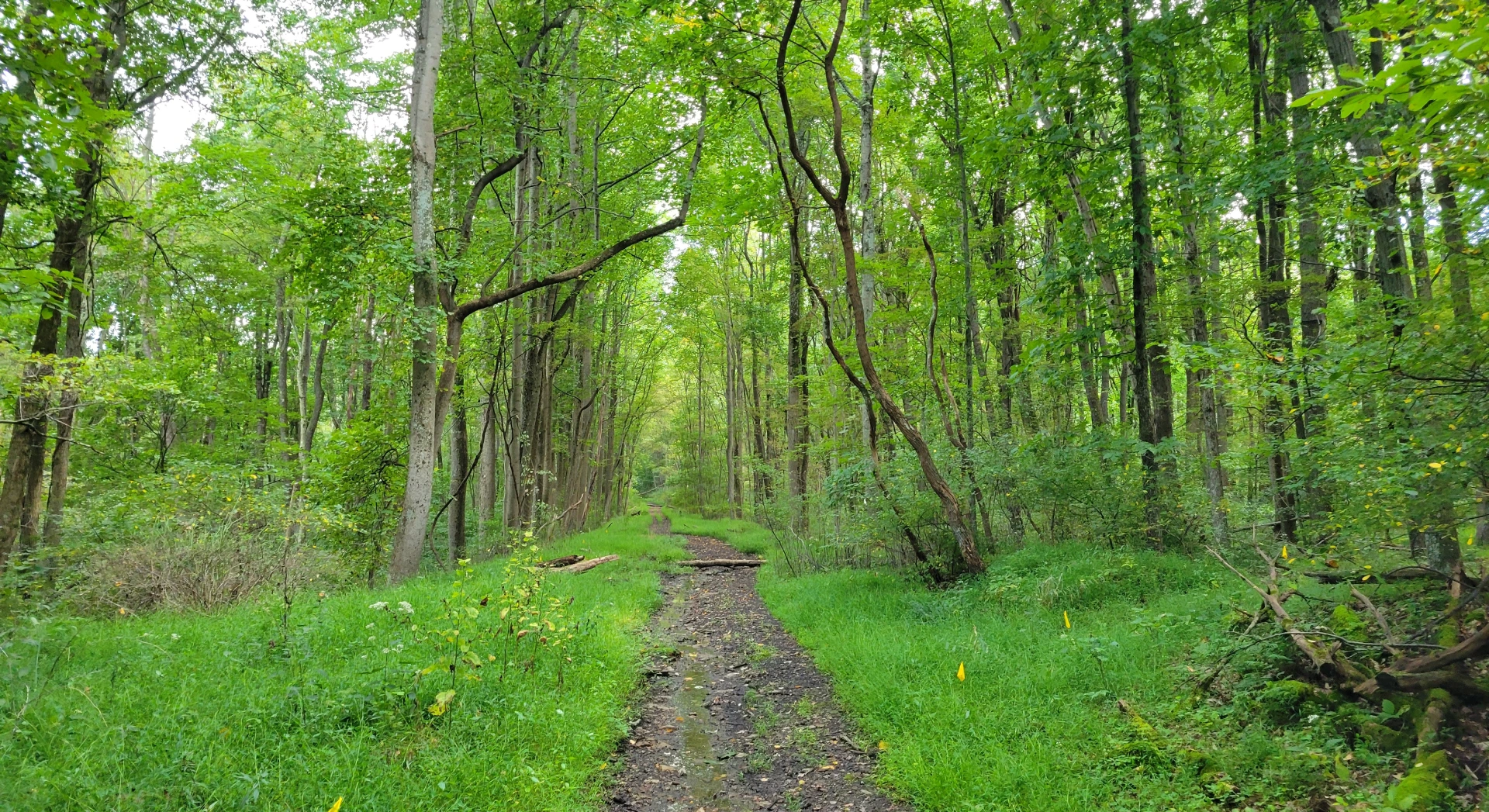
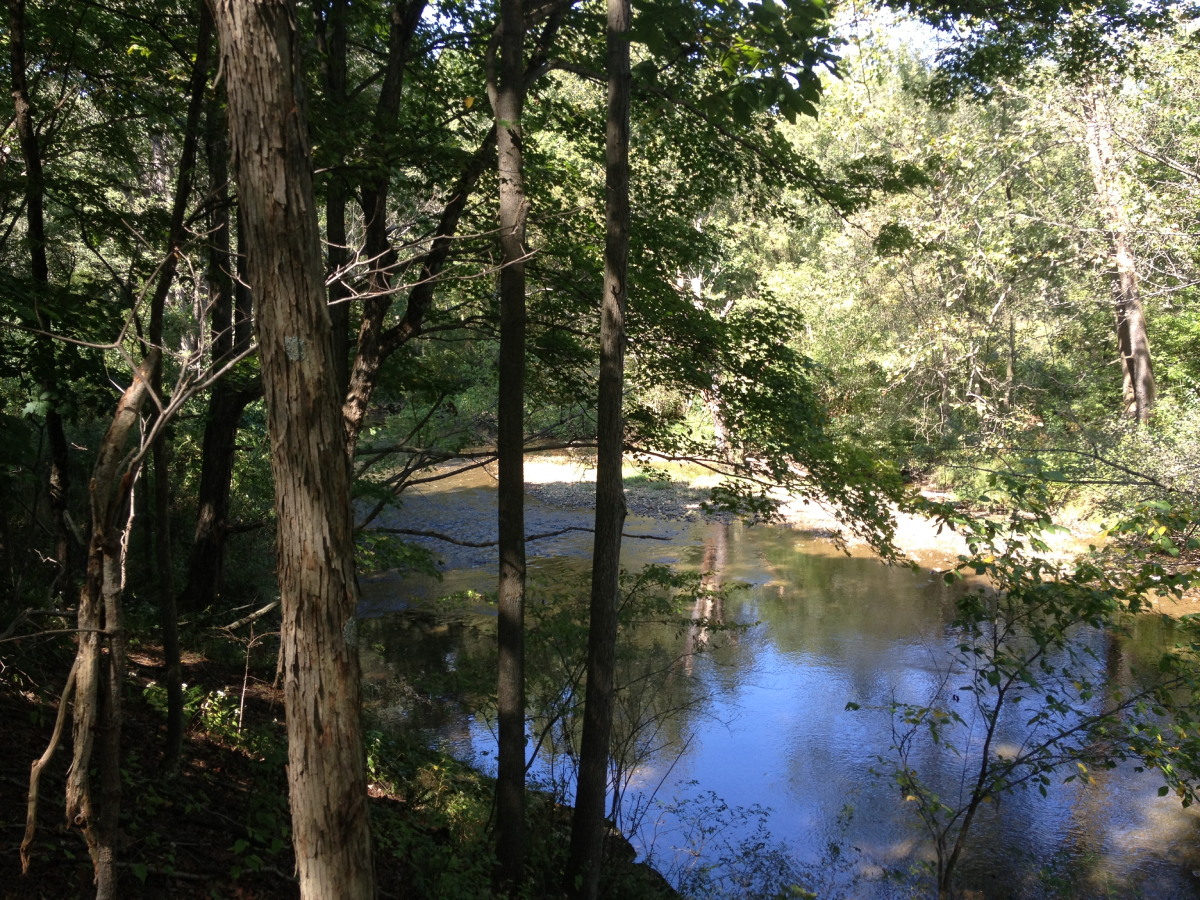
Colcom Foundation has an extensive history and ongoing priority of supporting both urban/suburban and rural land conservation projects in southwestern Pennsylvania. Land conservation advances several of the Foundation’s core environmental interests, including safeguarding biodiversity, mitigating urban sprawl, promoting watershed health, and increasing community access to nature. Since 2005, Colcom Foundation grants have enabled the permanent protection of over 12,000 acres in western Pennsylvania.
Urban and Suburban Land Conservation
Urban and Suburban land conservation is essential for fostering healthy, resilient communities in southwestern Pennsylvania. As development pressures intensify, preserving green spaces within urban and suburban areas helps counter the harmful impacts of urban sprawl—including habitat fragmentation, increased stormwater runoff, air pollution, heat island effects, and diminished quality of life. Urban land conservation ensures residents have nearby opportunities for recreation, education, and connection to the natural world. The following projects, carried out by some of Colcom’s exemplary grantees, represent the Foundation’s investments in southwestern Pennsylvania land conservation organizations and their urban/suburban conservation efforts.
Vinegar Hollow Conservation Area
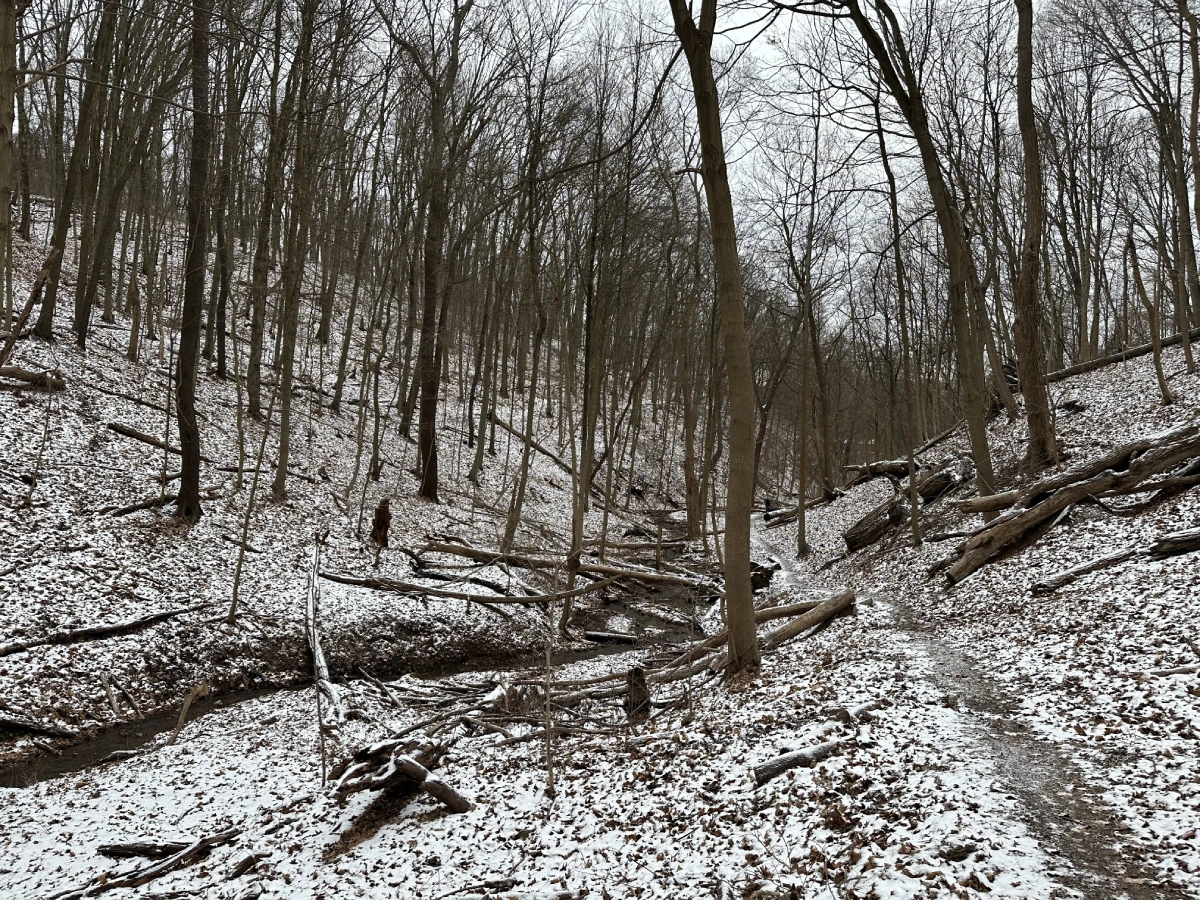
Vinegar Hollow Conservation Area stands as a landmark achievement in Pittsburgh-area land conservation, made possible through Colcom Foundation’s pivotal support. For generations, the 46-acre wooded hollow in Kilbuck Township had served as a beloved community refuge, its trails winding through lush hillsides rich in exceptional biodiversity. Dating back to the early 1900s Boy Scout Hodgdon Lodge and named for Civil War veteran John “Vinegar Jake” Signor, the land offered families a safe, natural escape from nearby Route 65 and urban development pressures. But in 2021, after seven years of negotiations and five years of community fundraising and advocacy led by Hollow Oak Land Trust, the property faced imminent threat from private development that could have erected barriers and erased public access forever.
In May 2021, Hollow Oak secured a $200,000 Colcom Foundation grant that proved catalytic in closing the purchase the following year, alongside county trail funds. This acquisition not only permanently protected the site as the Vinegar Hollow Conservation Area but also forged a vital greenway link connecting Avonworth communities to Sewickley, two public parks, multiple trails, and the Ohio River—bypassing dangerous roads and advancing Colcom’s priorities of enhancing community access to nature, safeguarding biodiversity, and curbing urban sprawl. Today, the protected hollow continues to serve as a keystone greenspace for residents of Kilbuck, Emsworth, Ben Avon, and beyond, ensuring that future generations can experience the same woods their grandparents cherished while preserving critical habitat in a rapidly developing region.
Nike Missile Site
Named for the Cold War-era missile site that used to exist there, in 2021 Hollow Oak Land Trust approached Colcom Foundation for support to acquire this 20-acre parcel. With a $30,000 grant from Colcom, paired with other philanthropic and public funding, Hollow Oak completed the purchase in December 2021, filling a critical “donut hole” in the center of its largest conservation area and expanding its Montour Woods nearly 7 percent to 320 acres.
Today the former military site has been permanently protected from development just one mile from Pittsburgh International Airport. New multi-use trails and public education programs on the site’s Cold War history invite residents to explore, connect with nature, and honor a landscape transformed from fear to hope.

Transformative Greenspace Protection
Since its founding, Allegheny Land Trust (ALT) has worked to protect the last remaining green spaces in and around Pittsburgh, ensuring that residents have close-to-home access to nature while safeguarding biodiversity, improving water quality, mitigating flooding, and curbing urban sprawl. In 2018, Colcom Foundation awarded transformative support through a five-year Greenspace Protection grant of $2,250,000. This investment provided both operational stability and rapid-response capital that allowed ALT to act decisively when properties faced development pressure. The results were historic: ALT more than doubled its annual pace of land protection, growing its conserved footprint from 2,100 acres in 26 municipalities in 2018 to 3,500 acres across 36 municipalities by 2022. The following emblematic successes illustrate just some of the grant’s impact.
The community-driven protection of the 155-acre Girty’s Woods in Reserve Township, Shaler Township, and Millvale Borough preserved critical habitat and the flood-prone Girty’s Run watershed just three miles from downtown Pittsburgh. The property now offers an informal network of trails through scenic overlooks, open fields, wetlands, historic relics, and recovering woodlands for hiking, birdwatching, biking, and passive recreation.
Similarly, the 40-acre Bethel Green conservation area in Bethel Park transformed a former coal-mine tailings site into a neighborhood oasis at the headwaters of the Saw Mill Run watershed. This greenspace filters millions of gallons of stormwater annually, provides accessible trails for thousands of nearby residents, and is undergoing habitat restoration to boost biodiversity.

Accelerating the Pace of Land Conservation in Allegheny County
Another landmark success from the 2018 Colcom grant was the permanent protection of the 151-acre Churchill Valley Greenway in Penn Hills and Churchill Borough. Formerly the abandoned Churchill Valley Country Club, the property—long a cherished local landmark—had sat vacant for nearly a decade before ALT partnered with residents in a passionate grassroots campaign that secured its conservation in 2021. Today the greenway offers more than five miles of trails through recovering meadows, woodlands, and along Chalfant Run, providing close-to-home opportunities for hiking, biking, birdwatching, and recreation for nearly 95,000 residents living within a three-mile radius. Like Girty’s Woods and Bethel Green, this project delivers vital community access to nature, restores local habitat, protects the watershed, and permanently prevents urban sprawl in one of Allegheny County’s densely populated eastern suburbs.
Building directly on this strengthened foundation, Colcom awarded ALT a second major grant in August 2022 for $1,600,000 to further accelerate its pace of land conservation. The funding enabled ALT to close on nearly 1,000 additional acres in just over two years, including significant properties such as the 64-acre Beurkle Woodlands, 53-acre Glade Run Lake expansion, 46-acre Pavkovic Farm (now Reserve Preserve), and multiple parcels that connected trails and habitats across Allegheny County. These acquisitions exemplified ALT’s dual focus on community access and ecological health—linking protected lands into larger, more resilient corridors while preventing further fragmentation of the landscape.
In May 2024, Colcom provided continued momentum with an additional $1,800,000 land conservation grant. Within the first six months, ALT had already secured matching funds and donor commitments for several of its largest projects to date: the 281-acre Deer Creek corridor, 221-acre Panhandle Greenway acquisitions, 124-acre Gateway Woods in Monroeville, and expansions along Lowries Run slopes and the Ross Conservation Project. Each of these efforts furthers the same core Colcom priorities—expanding public access to nature, protecting biodiversity-rich habitats, and permanently halting sprawl in one of Pennsylvania’s most populous regions.
Through these three grants, Colcom and Allegheny Land Trust have forged a powerful, ongoing partnership. The conserved lands now within eight miles of every Allegheny County resident stand as living proof that strategic philanthropic investment can deliver enduring community and environmental benefits for generations to come.

Sycamore Island
In late 2007, Allegheny Land Trust approached Colcom Foundation with a proposal to acquire Sycamore Island, the last remaining privately owned undeveloped island in Allegheny County. Nestled in the Allegheny River between Blawnox and Verona, this 14-acre sanctuary features a rare floodplain forest—classified as imperiled in Pennsylvania—and holds high ecological significance according to the Pennsylvania Natural Diversity Inventory. Rich in biodiversity, it is home to mature silver maples, sycamores, oaks, and other native trees, and serves as habitat for more than 100 bird species, including dozens of breeding pairs. With a storied past as one of Pittsburgh’s earliest bird sanctuaries, the island had long served as a natural refuge amid urban pressures, yet it faced the threat of development. Colcom’s $322,000 grant enabled ALT to complete the purchase by early 2008, permanently protecting the island from future development and preserving its cultural and ecological legacy. This landmark acquisition advances community access to nature and safeguards critical biodiversity, supporting ALT’s vision for stewardship, educational outreach, and limited public enjoyment via boat—ensuring future generations can experience this unique river island refuge.

Tree Pittsburgh Riverfront Campus
In 2022, Tree Pittsburgh—a Pittsburgh-based nonprofit dedicated to restoring and protecting the urban forest through tree planting, education, advocacy, and land conservation—approached Colcom Foundation for critical matching support to purchase its five-acre riverfront campus along the Allegheny River in the Lawrenceville neighborhood. Once a reclaimed brownfield site leased from the Urban Redevelopment Authority, the property had already been transformed into a vibrant hub featuring an award-winning, net-zero-energy Education Center (completed in 2018) with solar power, rainwater harvesting, native landscaping, and sustainable design. With Colcom’s $238,000 grant leveraging a Pennsylvania Department of Conservation and Natural Resources award, Tree Pittsburgh closed on the purchase in March 2024 and placed 3.5 acres under conservation easement, securing permanent public access to the river while providing a permanent home for the organization. This acquisition advances Colcom’s priorities of sustainability and increasing community access to nature by preserving a vital urban green space for hands-on environmental education, youth programs, urban agriculture, native tree propagation, and stewardship opportunities that inspire ongoing care for Pittsburgh’s natural environment. As a regional asset that fosters healthier communities and models creative land conservation in the urban core, Tree Pittsburgh’s campus ensures this riverfront treasure remains protected and accessible for generations to come.
Photo credit: Brad Feinknopf

Rural Land Conservation
Rural land conservation is also vital for sustaining the ecological integrity of southwestern Pennsylvania’s landscapes. By protecting forests, meadows, wetlands, rivers, streams, and working farms, conserved areas safeguard biodiversity through the preservation of large, unfragmented habitats and wildlife migration corridors. These efforts also advance stream and watershed health by filtering pollutants, reducing soil erosion, regulating natural water flows, and preventing contamination—delivering cleaner rivers, natural flood control, and resilient aquatic ecosystems downstream. The following projects represent some of the high-impact rural land conservation initiatives Colcom Foundation has supported.
Neal Run Restoration & Rail Trail Development
In the Aultmans Run Watershed of Indiana County, decades of coal mining left behind scarred landscapes, massive coal refuse piles, and severe acid mine drainage that degraded streams and waterways. At the center of this legacy lies the former company town of McIntyre, where industrial activity once dominated daily life. In 2021, Stream Restoration Incorporated (SRI) approached Colcom Foundation with two interconnected property acquisition proposals to break this cycle of pollution and unlock broader restoration: the Neal Run Restoration & Rail Trail Development Project and the Neal Run Passive Treatment System Project.
Founded in 1996 by Margaret Dunn to administer grants efficiently for small watershed groups, SRI has since managed over $15 million in funding and built nearly 30 passive treatment systems that treat billions of gallons of polluted water each year while preventing thousands of tons of acidity and metals from entering Pennsylvania streams.
These Colcom-supported projects enabled SRI to acquire two adjacent parcels totaling more than 200 acres that are essential to watershed recovery. In March 2022, SRI purchased the 92.8-acre former railroad corridor from Kovalchick Salvage Company; months later, in December 2022, it acquired the 109-acre Neal Run treatment property from Central Blair Electric Company. These lands, once sites of a major coal tipple, culverted streams, and eroding refuse piles that polluted Neal Run, now provide permanent access for maintaining one of the state’s worst acid mine discharges and position the sites for large-scale reclamation.
With SRI securing ownership, the grants advanced Colcom’s vision of healthier watersheds, greater biodiversity, and enhanced community access to nature. SRI’s ongoing work envisions coal refuse removal, stream daylighting, expanded passive treatment, educational features, and construction of a 4.5-mile multiuse rail-trail—transforming a polluted industrial corridor into a community asset. Through SRI’s stewardship, these projects not only protect water quality and restore habitat but also create lasting recreational opportunities and local pride in a region reclaiming its natural heritage.

Ligonier Farmland Protection
In 2011, the Western Pennsylvania Conservancy (WPC)—a leading land trust that has protected over 290,000 acres of natural lands across the state since 1932—approached Colcom for support for an ambitious initiative to safeguard working farms in the Ligonier Valley. Through the resulting Colcom grant, WPC pursued the acquisition of permanent agricultural easements on farms in the headwaters of the Loyalhanna Creek and Tubmill Creek watersheds, two priority waterways renowned for their exceptional water quality and rich aquatic biodiversity. By late 2013, the project had surpassed its original goal, permanently protecting nine farms totaling 997 acres in Westmoreland County’s Fairfield, Donegal, Ligonier, and Cook townships. These scenic properties, with prime agricultural soils and frontage along major routes connecting to the Pittsburgh metro area, were at high risk of residential development; the easements ensured their continued viability as working farms while preserving open space, wildlife habitat, and critical stream buffers.
The Ligonier Farmland Protection Project stands as a landmark achievement in Pennsylvania conservation, pushing the total acreage under easement in the Ligonier Valley past the 10,000-acre mark and inspiring additional landowners to follow suit. By limiting development along these high-quality streams, the protected lands help maintain clean headwaters that reduce sediment and pollutants downstream, support diverse aquatic life, mitigate flooding, and enhance recreational opportunities for communities like Latrobe. For Colcom, the initiative exemplifies how strategic investments in farmland preservation advance both biodiversity and watershed health, securing vital ecological services and Pennsylvania’s agricultural heritage.

Colcom Foundation Revolving Loan Fund for Local Land Trusts
In the late 2000s, WPC approached Colcom Foundation with a visionary proposal. Recognizing that smaller land trusts frequently missed high-priority conservation opportunities due to the typical 18- to 24-month timeline required for fundraising, WPC sought to create a flexible financing mechanism. In response, Colcom Foundation provided $1 million in grants to launch the Revolving Loan Fund for Local Land Trusts in 2009. This innovative program offers rapid-response, zero-interest bridge loans along with WPC’s hands-on technical and procedural assistance, empowering local partners to act swiftly on time-sensitive acquisitions while the fund revolved through repayments to support future projects.
Since its inception, the Revolving Loan Fund has become a cornerstone of conservation finance in western Pennsylvania. WPC has issued nearly $4 million in loans since 2009, helping protect approximately 1,847 acres of critical land across the region. By bridging funding gaps and providing expert guidance on everything from negotiations to closing, the fund has strengthened the capacity of local land trusts and conservation organizations, enabling them to secure properties that enhance biodiversity, improve watershed health, and expand public access to nature.
Notable successes illustrate the fund’s impact. The Somerset County Conservancy used a $200,000 loan to acquire the 275-acre Menser Property, expanding the Kimberly Run Natural Area into a 648-acre protected block that safeguards vital habitats and offers nearby communities low-impact recreational opportunities. Similarly, the Asbury Woods Partnership closed on an 11-acre Aquillano acquisition adjacent to its nature reserve with a $280,000 bridge loan, while the Allegheny Land Trust secured the 148-acre Churchill Valley Country Club property through a $515,000 loan from the fund. These projects—and dozens more—underscore the fund’s lasting value: preserving ecological connectivity, supporting healthy watersheds, and ensuring future generations in Western Pennsylvania can enjoy accessible natural spaces.

Conservation Blueprint and Upper Allegheny Watershed Land Conservation
In 2006, WPC approached Colcom for support of its visionary “Waters for Life – A Blueprint for Conservation” initiative. WPC received a $2 million Colcom Foundation grant that enabled the creation of the Conservation Blueprint, a science-driven strategic map leveraging decades of ecological data to prioritize high-biodiversity forests, streams, and habitats across four ecoregions. This foundational $2 million investment catalyzed decades of targeted conservation, advancing watershed protection and biodiversity preservation while providing a lasting framework that has guided WPC’s efforts to safeguard clean water sources and natural habitats essential to western Pennsylvania’s environmental health and community well-being. Collectively, the projects leveraged over $4.2 million in additional funding, opened new regional offices, produced basin-wide action plans, and permanently protected more than 4,000 acres of forestland, while advancing innovative research and partnerships.
Building on that success, Colcom awarded WPC a $1 million grant in 2025 to permanently protect at least 1,000 acres of priority headwater lands in the 7,600-square-mile Upper Allegheny Watershed. Encompassing pristine forests, wetlands, farmland, and the exceptionally biodiverse French Creek watershed—alongside stretches of the federally designated Wild and Scenic Allegheny and Clarion Rivers—the acquisitions advance watershed protection by safeguarding clean drinking-water sources for downstream communities, including Pittsburgh, while preserving critical aquatic and terrestrial wildlife habitats, enhancing flood resilience, and sustaining biodiversity amid development pressures. Through this project, Colcom and WPC have secured enduring ecological and community benefits that ripple far beyond the conserved lands.
Meadowlark and Brandt Property
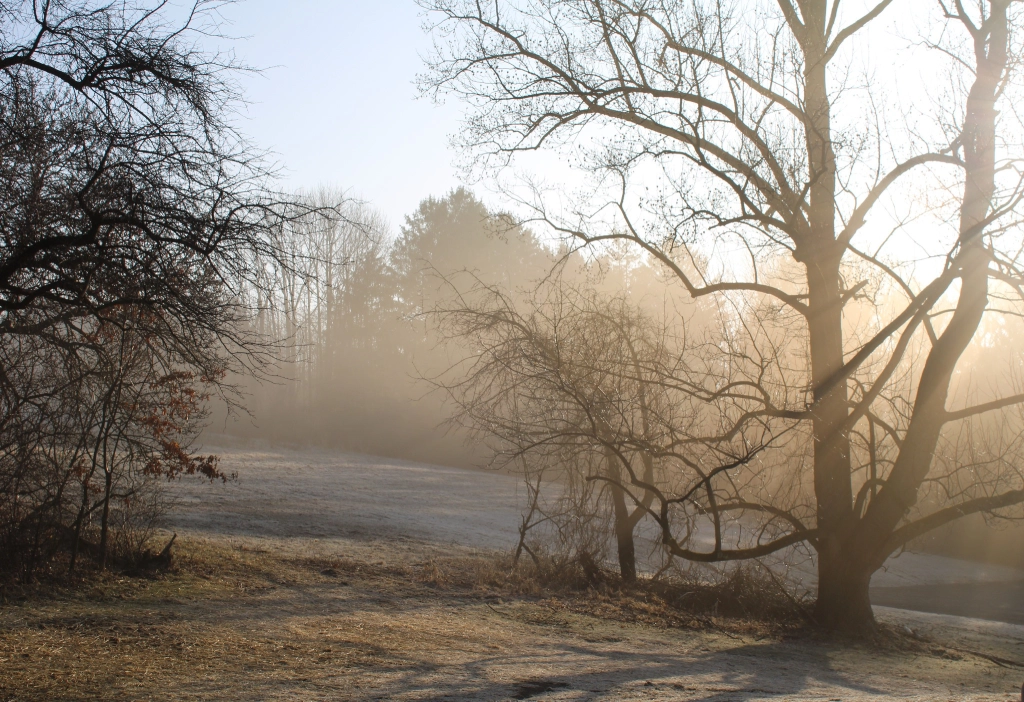
Westmoreland Land Trust (WLT) is a nonprofit land conservation organization founded in 2007 and dedicated to protecting Westmoreland County’s natural heritage through fee-simple acquisitions, habitat restoration, and public access. In 2020, WLT approached Colcom Foundation for support of its Meadowlark conservation project. With a $118,000 Colcom grant and matching funds from the Allegheny Foundation, WLT acquired the 96-acre Schwarz Farm in Hempfield Township in March 2021, creating the Meadowlark Nature and Art Park just three miles from downtown Greensburg. The former agricultural fields were transformed into pollinator-rich meadows and managed forest patches, safeguarding vital habitat for declining grassland birds such as the eastern meadowlark, bobolink, and grasshopper sparrow, while the property’s elevated ridges and sweeping views now serve as a scenic nature and art park that invites community engagement and artistic expression.
Two years later, Colcom provided $250,000 in critical matching support that enabled WLT to secure the 102-acre Brandt property in Unity Township, expanding the adjacent St. Xavier Nature Preserve to 350 contiguous acres. Together, these projects have permanently protected more than 200 acres from urban sprawl, bolstered biodiversity in a rapidly developing region, and delivered accessible green space to thousands of local residents near Greensburg and Latrobe. By conserving working landscapes as thriving natural areas, Colcom’s partnership with WLT advances habitat connectivity, public recreation, and the long-term health of Pennsylvania’s countryside.

Richter Run Conservation Area
In May 2024, Colcom Foundation awarded the Mountain Watershed Association (MWA) an $80,000 grant to support the acquisition of the Richter Run property—a 32-acre forested parcel bordering Richter Run, a pristine coldwater fishery in Pennsylvania’s Indian Creek Valley Gorge. Located in Springfield Township and part of a designated Natural Heritage Area prized for its exceptional biodiversity, the land was successfully acquired in September 2024, including mineral rights, permanently protecting vital habitat while expanding public access. As the sole community-based organization dedicated to monitoring the health of the Indian Creek watershed and maintaining its acid mine drainage treatment systems, MWA has long safeguarded aquatic ecosystems and drinking water supplies for local and downstream communities. Building on its earlier successes—including 4.3 miles of the popular Indian Creek Valley Trail developed in 2018 and the 2023 protection of 186 acres along nearby Rasler Run—the Richter Run project has already advanced trail building and educational programming, with a one-mile loop underway and future hiking and climbing opportunities planned. This initiative exemplifies Colcom’s commitment to advancing biodiversity conservation, community connections to nature, and the long-term health of vital watersheds.

Riddle Run Woodland Reroute
Founded in 1992, Rachel Carson Trails Conservancy (RCTC) is dedicated to low-impact trails that connect people with nature while minimizing environmental footprint. In 2022, RCTC approached Colcom Foundation seeking support to protect 53 acres of vital woodland between Riddle Run and the Allegheny River in Allegheny County. Colcom’s grant enabled RCTC to complete the land acquisition in 2023, securing parcels from an unexecuted residential development plan that had faced mounting pressures from nearby commercial growth, including the Pittsburgh Mills Mall and Route 28.
The conserved woodlands now anchor a high-quality hiking trail segment, complete with scenic river valley vistas, wildlife habitat, and connections to the Three Rivers Heritage Trail and Agan Park—transforming a once-dangerous roadside route into an accessible greenway near Rachel Carson’s childhood homestead. This project advances Colcom’s priorities by halting urban sprawl in redeveloping river towns like New Kensington, Tarentum, and Springdale, while expanding community access to nature through recreation, education, and stewardship opportunities that enrich local quality of life for generations to come.